The rail route between the Twin Cities and Seattle/Portland goes by many names. It was the main line of the Great Northern Railway. BNSF calls it the Northern Transcon (“Transcontinental”). Most locals call it the “Hi-Line.” Amtrak’s Empire Builder crosses it daily in each direction.
It’s the northernmost main railway line in the United States. Cut Bank, in Montana, is only 20 miles from the Canadian border. In the winter, there is significant snowfall all along the route. Sub-zero temperatures freeze switches and pipes. It’s legendary in railfan circles that the Superliners, first ordered in the mid-1970s, were designed with the harsh conditions of the Hi-Line in mind. It’s certainly true that the Empire Builder received the new cars first, in 1979.
In my first trip on the Empire Builder, in January 2009 (see “My worst best trip on the Empire Builder”), I experienced everything the Hi-Line could throw at me: equipment failures, a frozen switch, crew-service-time issues, and freight trains. We were 12 hours late into Spokane and bussed the rest of the way. My return trip was canceled by mudslides. My wise and tolerant wife forbade me from taking the Empire Builder in the dead of winter again, until she relented for this holiday season. How’d that work out for me? Well, let’s say there were some challenges amidst a good trip…
Outbound
I took the Lake Shore Limited out of New York. I was in coach as a cost-saving measure, and I’d bought pop-tarts and oranges (a great choice) at the Ideal Marketplace on Ninth Avenue in Manhattan. I skipped the cafe car for takeaway dinner inside the station at Albany-Rensselaer. Even with earplugs and a sleep mask I slept fitfully. In Chicago, I fortified myself at Lou Mitchell’s for the long day ahead.
The Portland sleeper was full of people heading out to the Pacific Northwest to visit family. There was Gene, across the hallway from, whose son was a fisherman. He’d actually been on the Lake Shore Limited with me, out of Syracuse. This was his first time on a train and I took him under my wing for the next few days. At dinner I met Paula and Michael, first-timers visiting an adult child. Amtrak does a good steak in a traditional dining car, and this one didn’t disappoint.
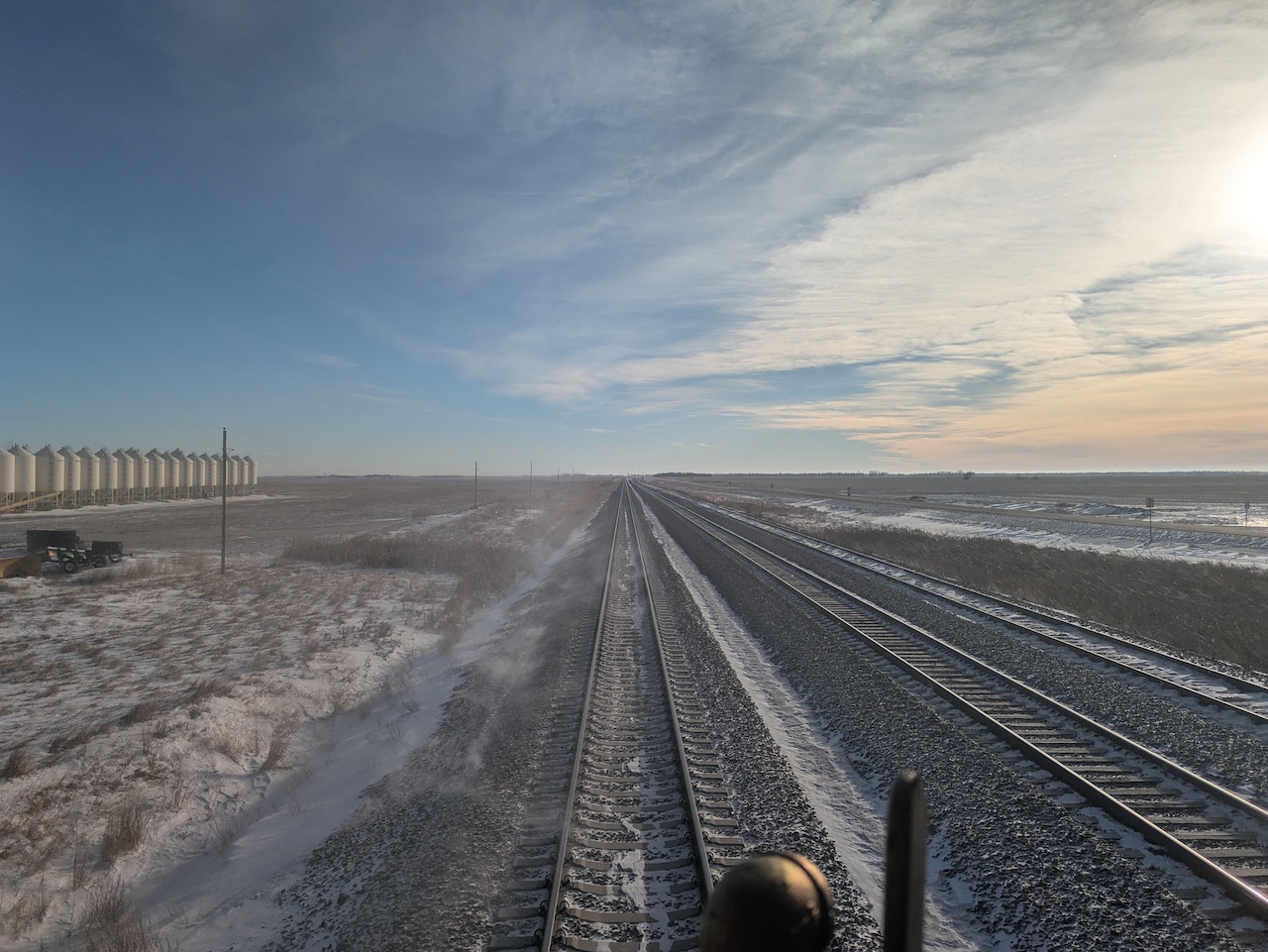
At breakfast I met Joe and his son PJ. They were connecting with the Coast Starlight in Portland to head down to Sacramento to visit another son and help him move into his new house. Joe’s a fellow railbuff and we had a lively conversation then and at lunch.
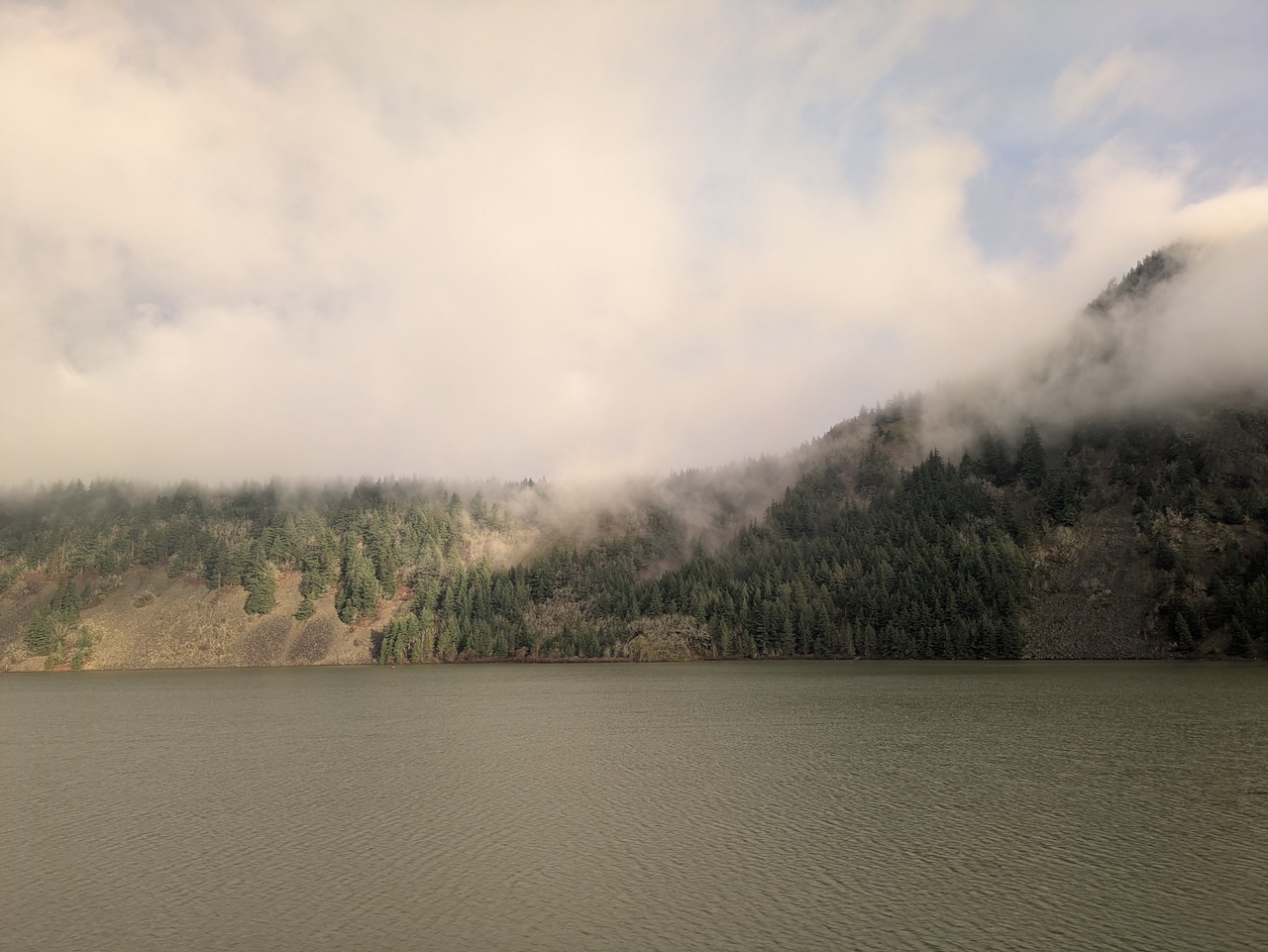
The trip went as well as you could hope for. We were never later than 30 minutes, and arrived early into Portland after a lovely run along the north side of the Columbia River. I spent a restful week with my wife (who had flown ahead) and my in-laws, about which perhaps more later. Then it came time for the return trip.
Inbound
I had the same sleeping car (Superliner I #32032) as the outbound trip, though not the same attendant. We did have the same lead attendant in the dining car (Josh), who would be hard-pressed by the last day of the trip. Across from me in the car were Eric and Mary, from Minneapolis. They’d been on my trip out but we hadn’t interacted. I also met Diane, retiree from Olympia visiting her friend in Milwaukee for New Year’s. This was her first train trip.
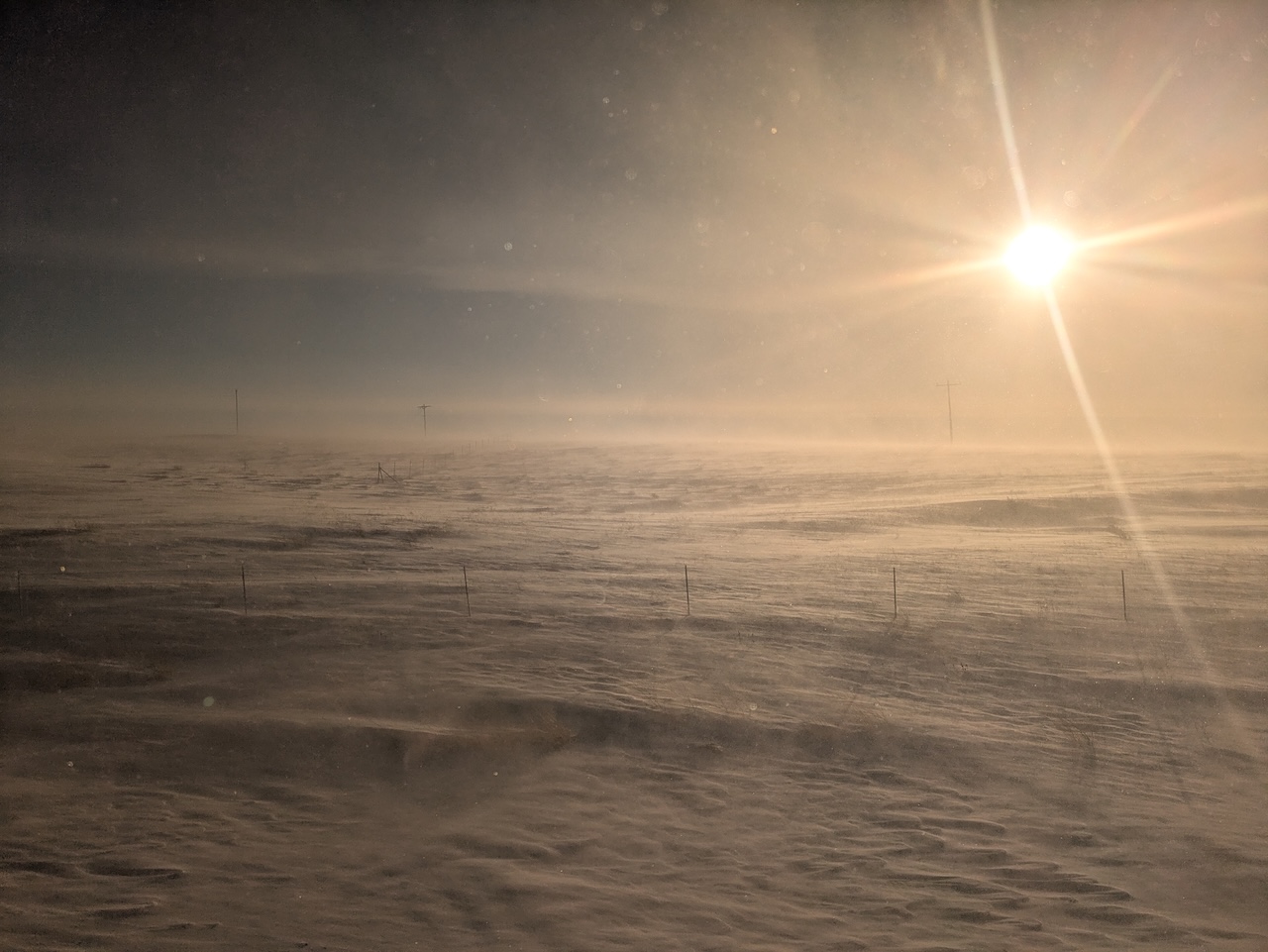
We had plenty of snow as we crawled through Glacier National Park, but we passed out of it as we headed east. Central Montana had almost no snow at all. It was a languid day. By the time I went to bed near Minot I’d read three books since we left Portland: Arthur C. Clark’s Prelude to Space, Rex Stout’s The Second Confession, and John le Carre’s The Pigeon Tunnel. We were on time and I was starting to look forward to an on-time arrival and quick transfer in Chicago the next day. In my other two eastbound trips on the Empire Builder (in 2011 and 2022), I’d been 3 hours 48 minutes and 1 hour 41 minutes late, respectively. As I mentioned, a third trip, in 2009, was wiped out by mudslides.
Veteran rail travelers recognize the sensation of waking up on a train that hasn’t moved in a while. The 1974 Murder on the Orient Express captured that quiet exactly. The storm that hit Minnesota as we entered it messed up roads, closed airports, …and froze some switches on our route through the state. We’d left Devils Lake (scene of my frozen switch adventure in 2009) down 55 minutes from freight interference. We lost four hours sitting just outside Grand Forks, before BNSF was able to thaw the switch. We lost another hour between Grand Forks and Fargo because of a second frozen switch. Having arrived 6 hours and 15 minutes late, we then lost close to two hours because our operating crew reached their limit and we had to wait for the new crew to drive up from St. Cloud.
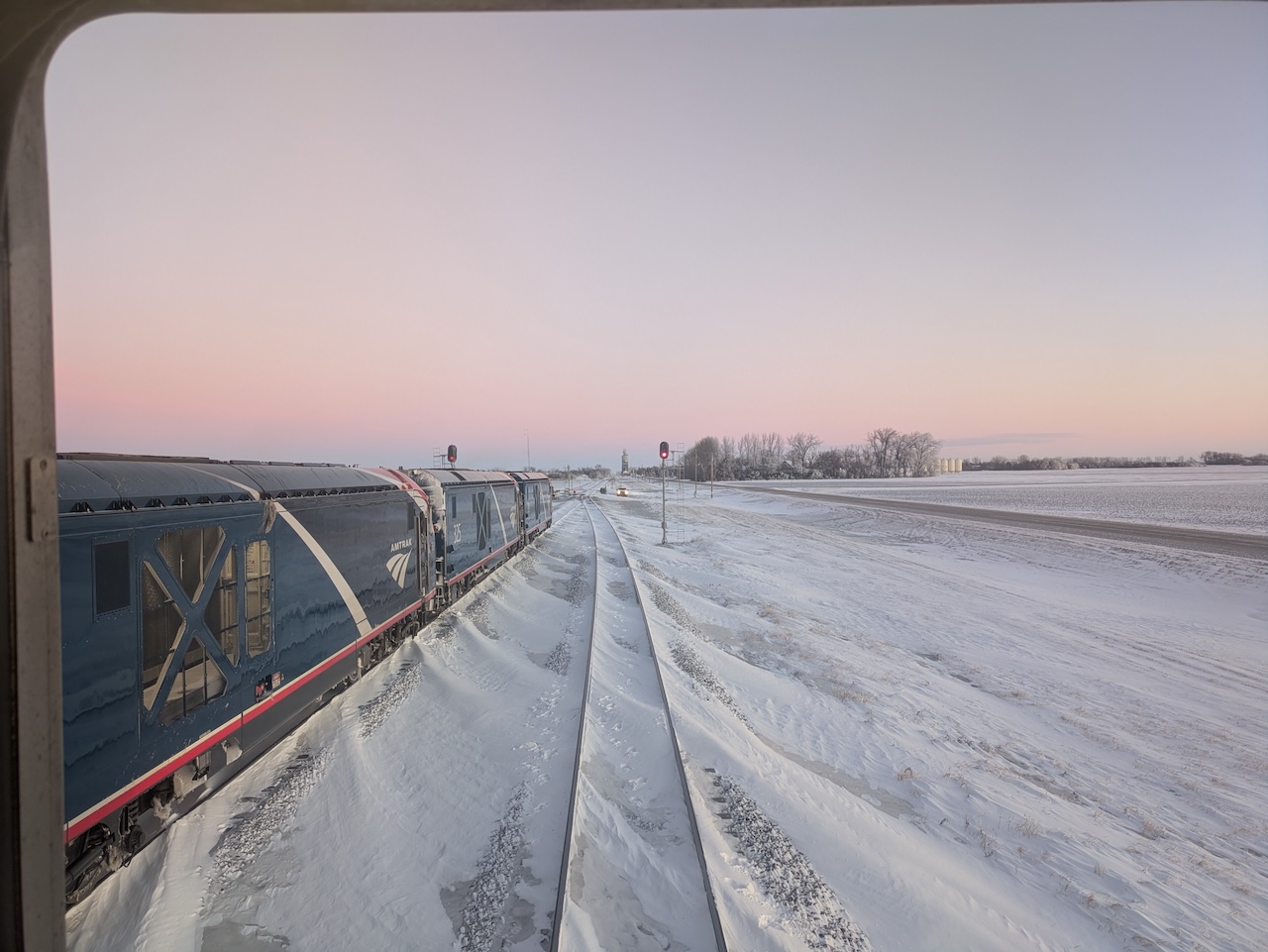
We never really made the time up after that, owing to weather and freight. A seven-hour delay means an extra meal service, including free dinner for coach passengers via the (in)famous beef stew kept around for just such an occasion. I met some new people, including two (one from Minot, one from Minneapolis), who’d booked late because of canceled flights. It was an odd thought that even with our lateness, we were still getting through while other folks weren’t. It didn’t sound like the Minneapolis airport was a fun place to be the evening of December 28! A note of humor was injected when the dining car had to delay the coach meal because both the primary and replacement can openers were unequal to the task. I never did ask Josh how they sorted it.
Where to stay in Chicago when you’re late
As a final insult, CPKC held us in Milwaukee for an hour because of heavy freight traffic. Morale had managed to stay fairly high around the train up until that point, but incurring another hour when we were so close hurt. Climate of rising expectations (“I expect to get off the train”) and all that. We finally straggled into Chicago at about 1:08 AM, or 8 hours and 23 minutes late.
The last outbound train was the Lake Shore Limited, which departed at 9:30 PM. There probably 40-50 of us who misconnected. I knew vaguely what Amtrak’s procedures were for these situations but I’d never experienced it before. This is what happens:
- When you detrain, all affected passengers are gathered in the south concourse at Union Station. Amtrak has your names and has already rebooked you. In my case, my connection to Philadelphia and Pittsburgh was moved back a day.
- Amtrak has a block of rooms at the Sleep Inn near Midway Airport. You’re given a food voucher and placed on a coach out to the hotel. At the hotel, you give the night manager your name and she gives you a room key. We don’t bother with any of the other formalities because Amtrak’s already vouched for us.
- At 11:00 AM, the coach comes back to haul everyone to Union Station. If you’re on an earlier train, you’re responsible for your own transport. Not wanting to experience a very full coach again, I took a bus to Midway and caught the Orange line to the Loop.
We arrived at Union Station around 1:10 AM. By 3:00 AM, I was asleep at the Sleep Inn. The process felt chaotic at the time, but on reflection it went smoothly enough. I’m grateful for what Amtrak did, which is more than what an airline would do. The next morning I dropped my stuff at Union Station and headed down to the Museum of Science and Industry, but that’s also another story.
Lessons
The lesson here is simple and doesn’t require belaboring. You might be on-time on occasion, but nature cannot be fooled and the Hi-Line wins in the end. Plan accordingly.